What actually happens at a first visit and a routine cleaning
No surprises, just the order things happen in, from the front desk to the chair.
September 15, 2026 · 4 min read
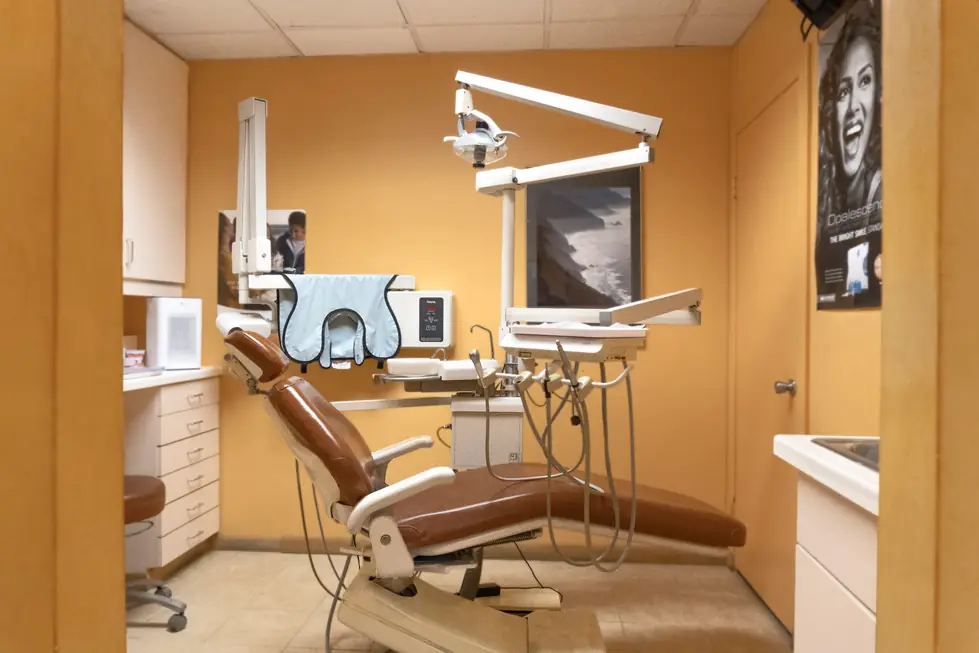
If you have not been to a dentist in a while, or you are simply new to the area, it helps to know what the first hour actually looks like before you sit in the chair. At Connecticut Dental Group, on Main Street in Bridgeport, a first visit follows a fairly predictable order, and none of it should catch you off guard.
Paperwork, then a look at the whole picture
You will fill out a health history first. This matters more than it seems. Medications, past surgeries, and conditions like diabetes or acid reflux all show up in the mouth in specific ways, and the front desk needs that information before anyone picks up a mirror. Once that is done, most first visits start with a panoramic X-ray, the kind where the machine circles slowly around your head. It captures every tooth, both jaws, and the sinuses in a single image, which gives the dentist a full map before doing anything more targeted. It is quick and it does not touch your teeth.
That panoramic image goes up on a wall monitor in the treatment room, where you can see it too. That is deliberate. It is a lot easier to understand why a tooth needs attention, or why one does not, when you are looking at the same picture the dentist is looking at, rather than trying to picture it from a description. If a problem tooth needs a closer look after that, a second monitor at the chair shows individual images, so a specific tooth can be pointed at directly rather than just described out loud.
The exam and the cleaning itself
With the X-ray as a reference, the exam covers each tooth, the gums, and the bite. This is where a chip you forgot about, a filling that is wearing thin, or early gum recession gets flagged. Then comes the cleaning. A hygienist removes plaque and tartar with hand instruments and an ultrasonic scaler, polishes the teeth, and flosses. For most people with healthy gums, this is done every six months. For people with gum disease, it is closer to every three months, sometimes with a deeper cleaning below the gumline first, along with a medicated mouthwash and guidance on flossing technique that actually reaches the problem areas rather than just the easy spots.
- Health history and a quick chat about anything that has been bothering you
- Panoramic X-ray, shown to you on the monitor, not just described
- Full exam of teeth, gums and bite
- Cleaning: scaling, polishing and flossing
- A plan for anything that needs follow-up, explained before you leave
Sealants and fluoride, especially for kids
For children, and for adults who are prone to cavities in the deep grooves of their back teeth, a first visit is often also when sealants and fluoride come up. A sealant is a thin protective coating painted onto the chewing surface of a molar, where a toothbrush bristle genuinely cannot reach into every groove. It takes a few minutes, does not require any numbing, and simply keeps food and bacteria from settling into those grooves in the first place. Fluoride treatment works differently, strengthening the enamel itself against acid from food and bacteria. Neither is limited to first visits specifically, and the hygienist will mention it again at a routine cleaning if it looks worth doing.
Instruments are wrapped and changed between patients
One thing patients rarely ask about, but should be able to take for granted, is what happens between appointments. The tray and handpieces are sleeved and changed for every single patient, and the hand sinks are inside the treatment room rather than down a hallway, so hands are washed right where the work happens. It is not glamorous, and most people never think to ask, but it is worth knowing it is standard here.
If something needs more than a cleaning
Sometimes the exam turns up something that needs its own conversation, a cavity, a cracked filling, early signs of gum disease. If that happens, the dentist will walk through the options in the room, using the same X-ray already on the screen, rather than sending you home to wonder. Nothing is scheduled or started without you understanding what it is and why, and there is no pressure to decide on the spot if you would rather think it over and call back.
Connecticut Dental Group sees kids and adults of any age, and most major insurance plans are accepted, though it is worth a call ahead to check your specific plan's co-pay before you come in. The office is easy to find, in the Commerce Park Professional Center on Main Street, less than half a mile off Exit 48 of the Merritt Parkway, with parking right at the building so you are not circling the block with a numb mouth on the way out. If it has been a while since your last cleaning, or you just moved to Bridgeport or Trumbull and need a dentist, call the office and get on the schedule.
Connecticut Dental Group, (203) 372-4200
Call (203) 372-4200More articles
You chipped a tooth. Here is the difference between bonding, a crown and a veneer
The size of the chip and where it sits usually decides the fix, more than personal taste does.
Getting an implant when the periodontist and the oral surgeon are down the hall
Fewer offices, fewer new charts, and one team that already has your X-ray on file.